

In a significant leap forward for developers building generative AI applications and intelligent agents, Amazon Web Services (AWS) has unveiled the next generation of Amazon OpenSearch Serverless. This fully managed search and vector engine, designed specifically to meet the high-performance requirements of modern AI, promises to reshape how enterprises deploy search backends by eliminating infrastructure management and introducing radical cost efficiencies.
The announcement marks a departure from traditional, cluster-based provisioning, offering a "scale-to-zero" capability that aligns perfectly with the unpredictable nature of AI-driven workloads. By automating resource lifecycle management, AWS is lowering the barrier to entry for businesses looking to integrate vector search and retrieval-augmented generation (RAG) into their production pipelines.
The Core Innovation: Efficiency and Velocity
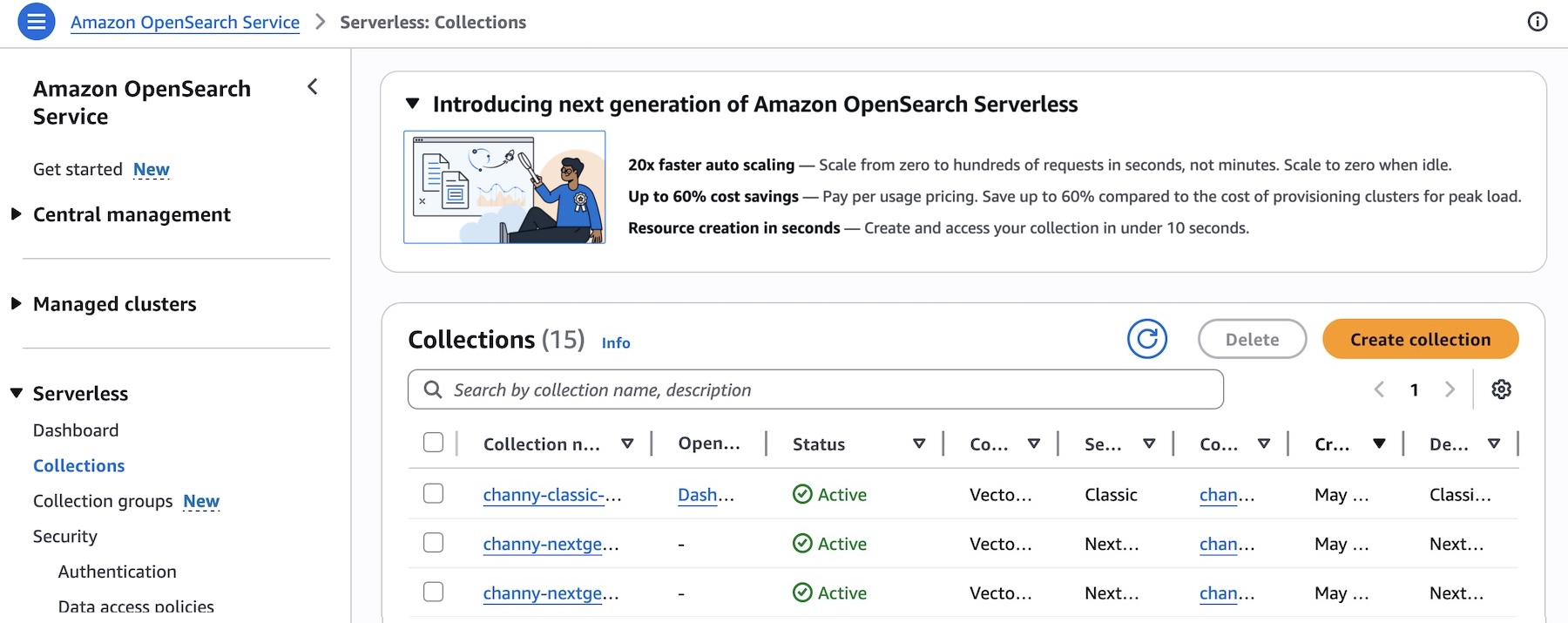
At the heart of the next generation of OpenSearch Serverless is a redesigned architecture that significantly reduces the time-to-market for search-heavy applications. According to AWS, the service now creates resources in mere seconds, with an auto-scaling engine that reacts up to 20 times faster than its predecessor.
Key Technical Breakthroughs:
- Scale-to-Zero Capabilities: Unlike traditional clusters that require constant provisioning for peak loads, this new iteration allows resources to scale down to zero when idle. This prevents "idle-compute waste," a common pain point in cloud architecture.
- Cost Optimization: AWS reports that customers can achieve up to 60% in cost savings compared to traditional OpenSearch Service clusters that must be provisioned for maximum capacity.
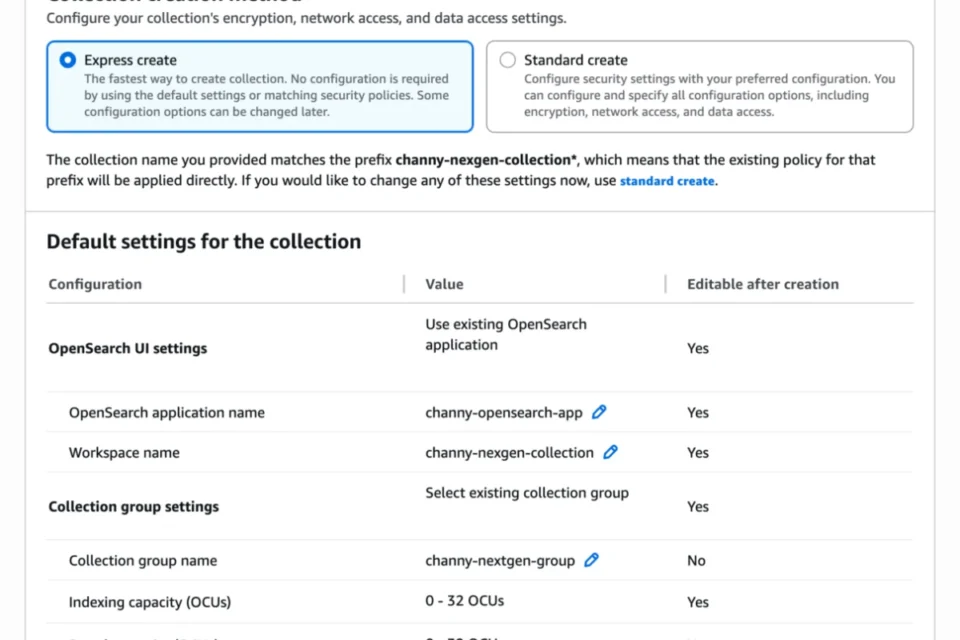
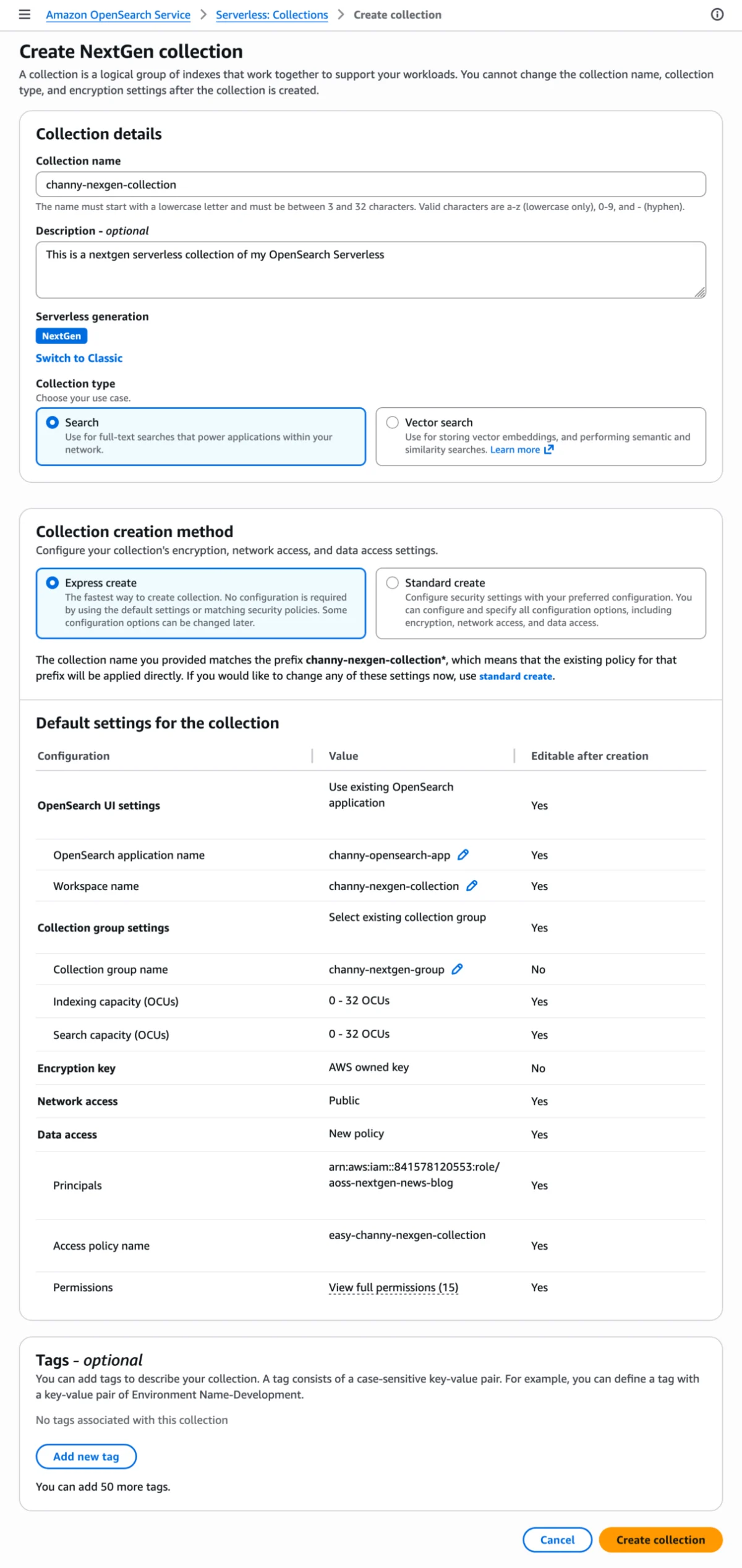
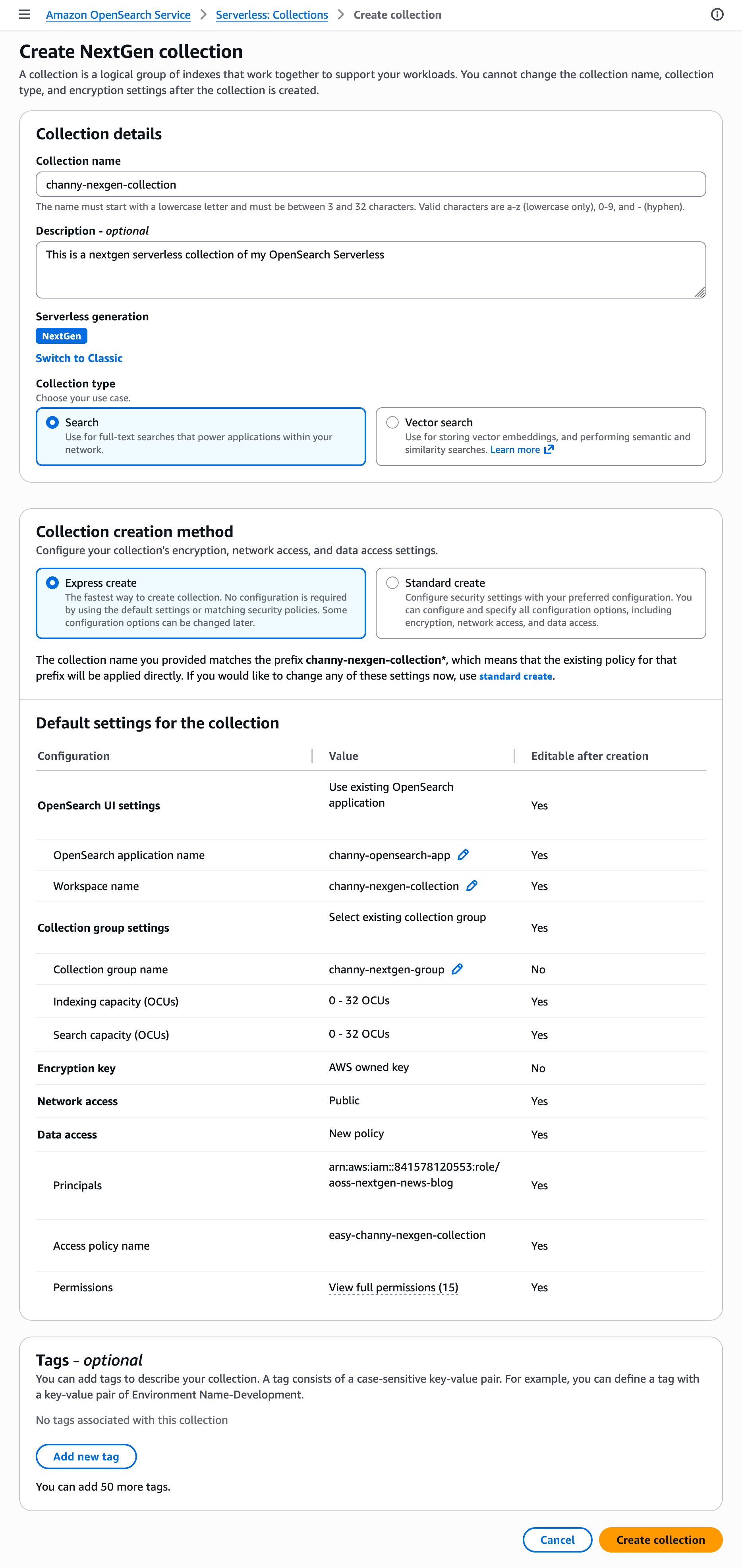
- Rapid Deployment: The "Express Create" option allows developers to spin up production-ready collections without complex configuration, automatically applying security policies and default settings.
Chronology of Development: From Concept to Global Launch
The evolution of OpenSearch Serverless has been a strategic focus for AWS as the demand for vector search exploded alongside the rise of Large Language Models (LLMs).
- Initial Serverless Foundation: AWS first introduced the concept of serverless search to remove the operational overhead of managing nodes, shards, and hardware.
- The AI Pivot (2024-2025): As developers began building AI agents, the need for low-latency vector databases became critical. AWS began integrating native vector search capabilities into its serverless offerings.
- Next-Gen Beta and Refinement (Early 2026): Throughout early 2026, AWS focused on refining the "cold start" latency and auto-scaling responsiveness.
- May 29, 2026 – Global General Availability: AWS officially launched the next generation of the service across all commercial regions, accompanied by deep integrations with developer-centric platforms like Vercel and Kiro.
Supporting Data and Technical Specifications
The performance metrics associated with the next generation of OpenSearch Serverless are designed to support enterprise-grade AI agents. The service supports two primary collection types: SEARCH for full-text capabilities and VECTORSEARCH for high-dimensional data essential for AI similarity searches.
Infrastructure Capacity
The system utilizes OpenSearch Compute Units (OCUs) to govern performance. Developers can now programmatically manage their capacity limits via the AWS Command Line Interface (CLI) or SDKs.
Sample Capacity Configuration (CLI):
aws opensearchserverless create-collection-group
    --name nextgen-ai-group
    --standby-replicas ENABLED
    --generation NEXTGEN
    --capacity-limits '
        "maxIndexingCapacityInOCU": 96,
        "maxSearchCapacityInOCU": 96,
        "minIndexingCapacityInOCU": 0,
        "minSearchCapacityInOCU": 0
    '
Note: As of the May 2026 update, AWS clarified that users should calibrate their OCU limits based on binary sequences to ensure optimal performance scaling.

Strategic Integrations: Vercel and Kiro
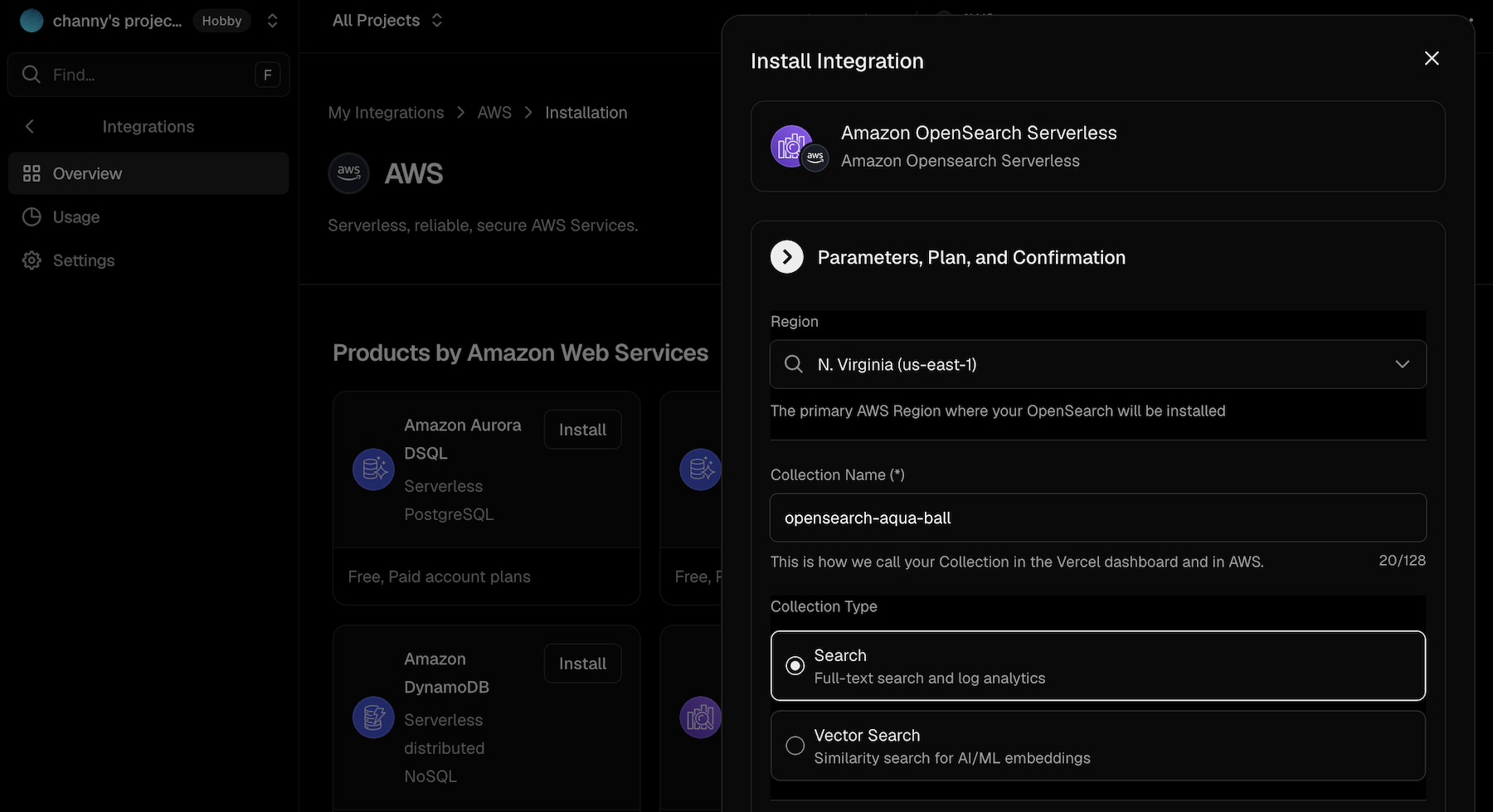
AWS has recognized that the success of a serverless engine depends on its ecosystem. By partnering with Vercel, AWS allows frontend-focused teams to provision search backends directly within the Vercel console. This integration allows developers to build AI-powered user interfaces that query OpenSearch collections with virtually no backend infrastructure code.
Furthermore, the integration with Kiro and the introduction of OpenSearch Agent Skills represent a shift toward "intelligent" infrastructure. These skills act as pre-packaged logic, allowing AI agents to understand how to perform complex search workflows without the developer needing to hard-code every edge case. This "domain-aware" approach significantly reduces the time required to build RAG-based applications.
Implications for the AI Industry
The implications of this launch are profound for both startups and enterprise developers.
1. Democratization of AI Infrastructure
Previously, deploying a production-ready vector database was an operationally intensive task that required dedicated DevOps resources. By automating the deployment process, AWS is enabling smaller teams to build products that were once the exclusive domain of large engineering organizations.
2. The Shift to "Pay-for-What-You-Use" AI
The move to a true scale-to-zero model changes the financial calculus for AI. Startups can now launch products that have zero recurring infrastructure costs during periods of low activity, significantly reducing the "burn rate" of early-stage ventures.
3. Accelerated Iteration Cycles
With the combination of Claude Code, Cursor, and OpenSearch Launchpad, developers can move from an initial idea to a functional, production-ready prototype in minutes. This speed is critical in an AI landscape that changes weekly.
Official Responses and Developer Guidance
In a recent communication, AWS lead advocate Channy Yun emphasized the importance of the "NextGen" transition. "The goal was to make search invisible," Yun noted. "By handling the scaling logic and the underlying security policies automatically, we allow developers to focus on the ‘intelligence’ part of their agents, rather than the plumbing."
AWS has encouraged users to transition from "Classic" infrastructure to the "NextGen" collections to take full advantage of the auto-scaling and cost-saving benefits. For those already operating in the ecosystem, the migration path is supported through the console’s intuitive "Switch to Classic" toggle, though the company advises that new project development should default to the NextGen architecture.
Addressing Common Challenges: Performance and Security
Despite the automation, security remains paramount. The next generation of OpenSearch Serverless maintains full compatibility with existing AWS security policies. The service utilizes IAM (Identity and Access Management) to ensure that even with the speed of "Express Create," enterprise-grade security is enforced by default.
For organizations concerned about performance during massive traffic spikes, the "NextGen" architecture has been optimized to handle thousands of requests per second. The ability to set maxIndexingCapacityInOCU and maxSearchCapacityInOCU ensures that businesses can place hard limits on their costs while allowing the system the elasticity to meet demand bursts.
Conclusion: The Future of Serverless Search
The release of the next generation of Amazon OpenSearch Serverless is not merely an incremental update; it is a fundamental rethinking of what a managed service should look like in the age of AI. By prioritizing speed, cost-efficiency, and deep integration with the modern development stack, AWS is positioning itself as the backbone of the next wave of intelligent applications.
For developers, the message is clear: the infrastructure that powers AI agents is no longer a bottleneck. With the ability to scale from zero to high-concurrency production in seconds, the barrier to building the next great AI-powered product has never been lower.
Quick Links for Developers:
- Documentation: Amazon OpenSearch Serverless Developer Guide
- Community Support: AWS re:Post for OpenSearch
- Pricing Details: Amazon OpenSearch Service Pricing
Disclaimer: This report is based on the May 2026 AWS announcement. Users are advised to review the official AWS documentation for the most current CLI syntax and regional availability updates.
